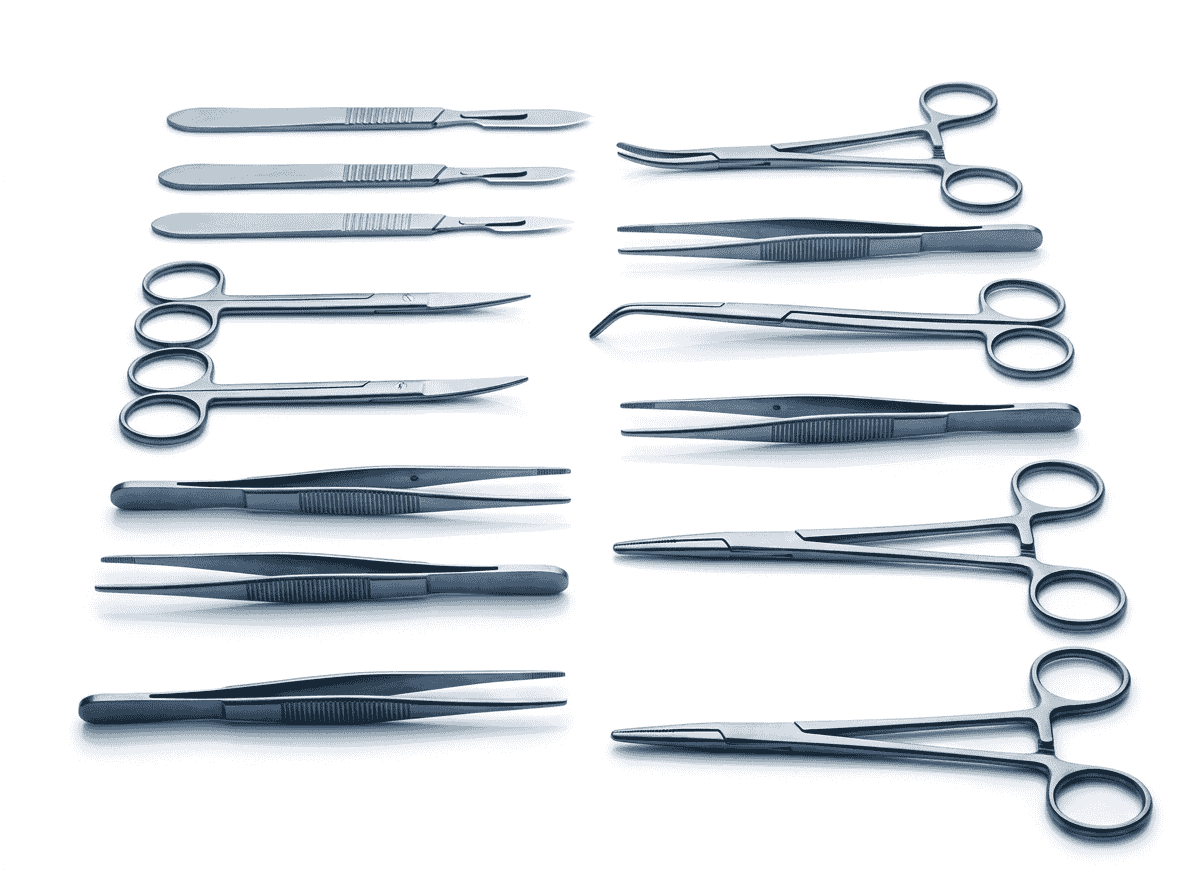
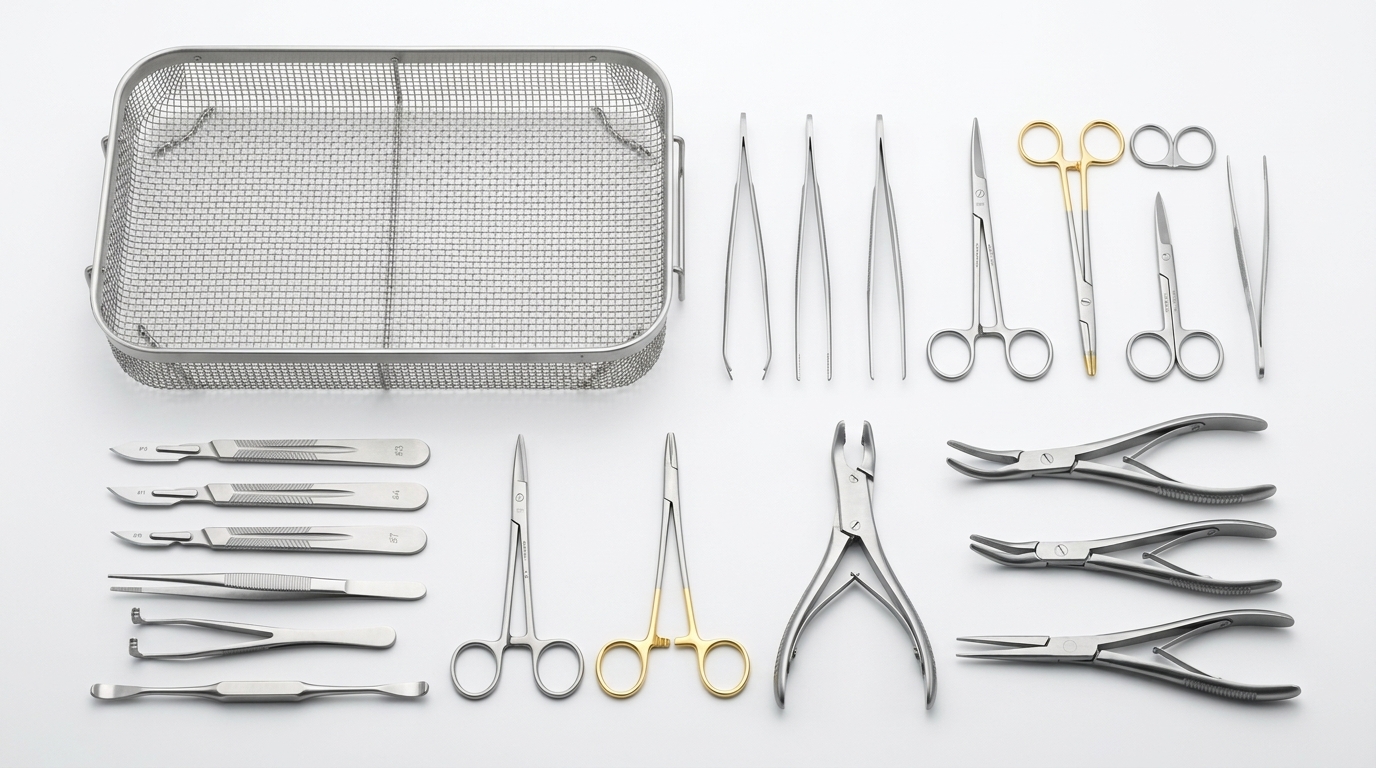
Key Insights for Practitioners
- Determine surgical procedural demands and tactile feedback requirements before selecting instrument patterns.
- Evaluate German stainless steel composition (AISI 410, 420, 440) for edge retention versus corrosion resistance.
- Verify manufacturer passivation certifications and ISO 13485 batch traceability for dependable sterilization cycles.
High quality surgical instruments are an important investment for hospitals, clinics, healthcare suppliers, distributors, and other professional buyers. An instrument should do more than look well finished. It should be appropriate for its intended function, manufactured consistently, and designed to perform reliably under the conditions for which it is supplied.
For professional buyers, evaluating an instrument requires looking at several factors together. Material selection, dimensional accuracy, alignment, working ends, movement, surface finish, durability, and quality inspection can all influence the overall value of a product.
This becomes even more important for B2B buyers purchasing in larger quantities. Consistency between one instrument and the next matters because distributors and healthcare suppliers need products that follow the required specifications across repeat orders.
Understanding how to choose high quality surgical instruments can help buyers compare products more effectively, communicate their requirements clearly, and make better long-term sourcing decisions.
What Makes High Quality Surgical Instruments?
Quality is not defined by one feature alone. Understanding what makes surgical instruments high quality starts with evaluating how well an instrument is manufactured according to its intended use and required specifications.
The first consideration is construction. Dimensions, alignment, moving components, working ends, and overall form should be appropriate for the instrument's function.
An instrument with hinged parts should move smoothly where movement is required. Working ends should align correctly according to the design. Handles, jaws, cutting surfaces, and locking areas should be formed consistently.
Surface finish is another important consideration. A professionally manufactured instrument should have a clean and consistent finish suitable for its intended application.
For B2B buyers, consistency becomes particularly important. When purchasing multiple pieces or placing repeat orders, the products should maintain the agreed dimensions, construction, and functional characteristics.
This is why quality should be evaluated as a combination of material, precision, construction, finishing, inspection, and production consistency, rather than judged by appearance alone.
Why Precision Matters in Surgical Tools
Different surgical tools perform different functions, so precision needs to be evaluated according to the design of each product.
A forceps-style instrument, a cutting instrument, a retractor, and a holding instrument will not have identical functional requirements. Their dimensions, working ends, handles, joints, and contact surfaces need to be appropriate for their intended purpose.
Small inconsistencies can affect handling and function. This is why precision surgical instruments require careful attention during manufacturing and inspection.
For professional buyers, precision is also important when comparing samples or reviewing repeat production. An instrument that performs as expected in one order should not differ unnecessarily in the next.
Distributors and healthcare suppliers may also need consistency because the products become part of a regular catalog. Clear specifications make it easier to maintain expectations across inventory and future purchasing.
When considering what to look for in surgical instruments, buyers should therefore evaluate how accurately the product matches its required design rather than simply judging how polished or attractive it looks.
Material Selection and Surface Finish
Material selection contributes to the overall performance and durability of professional instruments.
Stainless steel is commonly used in surgical and medical instrument manufacturing because suitable stainless-steel materials can provide useful combinations of strength, corrosion resistance, hardness, and durability.
However, material should always be considered together with the design and intended function of the instrument. Different products can require different material characteristics depending on how they are expected to perform.
Professional buyers should therefore avoid treating every stainless-steel instrument as identical simply because the material is described using the same general term.
Surface finish also matters.
A clean and consistent finish can make it easier to evaluate manufacturing quality. Rough areas, visible imperfections, irregular surfaces, or inconsistent finishing may indicate that the product requires closer inspection.
Construction and finish should be evaluated together. An instrument can have an attractive surface but still require attention if its alignment, movement, or working ends are not correct.
For commercial buyers, requesting clear product specifications and evaluating samples can make these differences easier to identify before placing larger orders. This is an important part of how to evaluate surgical instrument quality before making a significant B2B purchase.
Durability and Long-Term Purchasing Value
Reusable professional instruments may be exposed to repeated handling, cleaning, sterilization, storage, and use. For this reason, durability is an important consideration for healthcare buyers.
A durable instrument should maintain its intended characteristics when it is used and maintained appropriately.
Material selection, manufacturing accuracy, construction, finishing, and inspection can all contribute to long-term performance.
For hospitals and clinics, durability can affect how frequently products need to be replaced. For distributors and healthcare suppliers, it can influence customer satisfaction and the value of maintaining a particular product in the catalog.
The lowest initial price does not always represent the best purchasing value.
A professional buyer should consider whether the product appears suitable for its intended application, whether specifications are clear, whether quality remains consistent, and whether the same product can be sourced again when required.
This broader view helps buyers evaluate surgical tools rather than comparing products only on unit price.
The Importance of Quality Control and Manufacturing Consistency
Quality control should not be treated as only a final visual check.
Depending on the instrument, professional surgical instruments manufacturers may need to evaluate dimensions, alignment, movement, working surfaces, construction, and finish at different stages of production.
The exact inspection requirements will depend on the type of product.
For example, an instrument with moving parts may need to be evaluated differently from a fixed retractor or another single-piece design. The inspection process should reflect what the product is intended to do.
For B2B buyers, understanding how a manufacturer approaches quality control can be useful when comparing potential sourcing partners.
Buyers can ask for relevant product specifications, material information, sample products, and details that help them evaluate whether the manufacturer can meet their requirements consistently.
Sample evaluation can be particularly useful before larger orders. It allows the buyer to review construction, finishing, handling, and overall suitability before committing to a larger quantity.
Consistency across production is equally important. A good sample has limited value if later orders do not maintain the same required specifications.
These factors are especially useful when deciding how to compare surgical instruments manufacturers for repeat purchasing and long-term B2B sourcing.
Selecting Surgical Tools and Surgical Instrument Sets
The right surgical tools depend on the intended application.
Before purchasing, buyers should consider the procedure or use case, required dimensions, instrument pattern, working end, handle design, material, and expected frequency of use.
Different healthcare sectors may also require different product designs. Veterinary, dental, and human surgical applications can involve different instruments and configurations.
This is why professional buyers should avoid selecting products only by appearance or price.
The same approach applies to surgical instrument sets.
A suitable set should contain the instruments, quantities, sizes, and configurations required for the buyer's intended application. A larger number of pieces does not automatically make a set more useful.
When considering how to choose surgical instrument sets, buyers should review the contents carefully and confirm whether the included products match their actual requirements.
For B2B customers, customized surgical instrument sets can also be useful when a standard configuration does not match a specific purchasing requirement.
A well-planned set should be practical, organized, and based on actual use rather than simply designed to increase the number of instruments included.
What B2B Buyers Should Consider When Choosing a Manufacturer
Selecting between surgical instruments manufacturers is an important part of professional sourcing.
Buyers should evaluate more than the product catalog. Manufacturing capability, product specifications, material information, quality-control procedures, customization options, communication, and consistency across repeat orders can all influence the purchasing relationship.
Samples can be useful when evaluating a new supplier. They allow buyers to review construction, finish, handling, and suitability before placing a larger order.
Clear communication is equally important.
A manufacturer should understand the requested product, dimensions, quantity, and other relevant requirements. When specifications are unclear, the risk of receiving unsuitable products increases.
For distributors, healthcare suppliers, and other B2B buyers, repeat-order consistency is also important. Products that become part of a regular commercial range need to remain identifiable and manageable across future purchases.
A dependable sourcing relationship should therefore provide more than a single successful order. It should support clear specifications, consistent communication, and reliable repeat purchasing.
Knowing how to compare surgical instruments manufacturers can help professional buyers evaluate these factors before developing a long-term sourcing relationship.
Why Choose StahlForge?
StahlForge focuses on professional B2B buyers looking for instruments and sourcing solutions based on clear product requirements.
For distributors, clinics, healthcare suppliers, and other commercial buyers, product selection should begin with the intended application and required specifications.
StahlForge offers individual products as well as surgical instrument sets, allowing buyers to review different purchasing options according to their needs.
For larger orders, clear information about required products, quantities, sizes, configurations, and other relevant details can help make the sourcing process more organized.
The aim is to support professional buyers who value precision, consistency, and clear communication when selecting a manufacturing partner.
Whether the requirement involves individual surgical tools, complete sets, or repeat B2B purchasing, StahlForge works with buyers based on their defined product requirements.
Final Thoughts
Selecting high quality surgical instruments requires more than comparing appearance or price.
Professional buyers should consider material, precision, construction, surface finish, durability, quality control, manufacturing consistency, and whether the product is appropriate for its intended application.
Understanding how to choose high quality surgical instruments can make it easier for healthcare buyers, distributors, and other professional customers to evaluate available options more carefully.
For B2B buyers, the manufacturer matters as much as the individual product. Clear specifications, sample evaluation, consistent communication, and dependable repeat production can all contribute to a stronger purchasing relationship.
Whether sourcing individual surgical tools or complete surgical instrument sets, buyers should evaluate products carefully and make decisions based on practical requirements rather than presentation alone.
With a focus on professional B2B sourcing, StahlForge works with buyers looking for instruments and sets that align with their defined product requirements.
Frequently Asked Questions
Common questions from surgical coordinators, veterinarians, and procurement directors.
What should I look for in a quality surgical instrument?
Consider material, precision, construction, finishing, durability, and manufacturing quality control. These are also important factors when evaluating what to look for in surgical instruments for professional use.
Why is precision important in surgical instruments?
Precision helps an instrument match its intended design and function. Dimensions, working ends, joints, and moving components should perform consistently according to the product requirements.
Why is stainless steel used for surgical instruments?
Suitable stainless-steel materials can provide useful combinations of strength, corrosion resistance, hardness, and durability for many professional instrument applications.
How should I evaluate surgical instruments manufacturers?
Review manufacturing capability, product specifications, material information, quality-control approach, sample quality, communication, and the ability to maintain consistent production. This is a practical approach to how to compare surgical instruments manufacturers.
How do I choose high quality surgical instruments?
When considering how to choose high quality surgical instruments, evaluate the intended application, material, precision, construction, finishing, durability, quality control, and manufacturing consistency.