
Key Insights for Practitioners
- Determine surgical procedural demands and tactile feedback requirements before selecting instrument patterns.
- Evaluate German stainless steel composition (AISI 410, 420, 440) for edge retention versus corrosion resistance.
- Verify manufacturer passivation certifications and ISO 13485 batch traceability for dependable sterilization cycles.
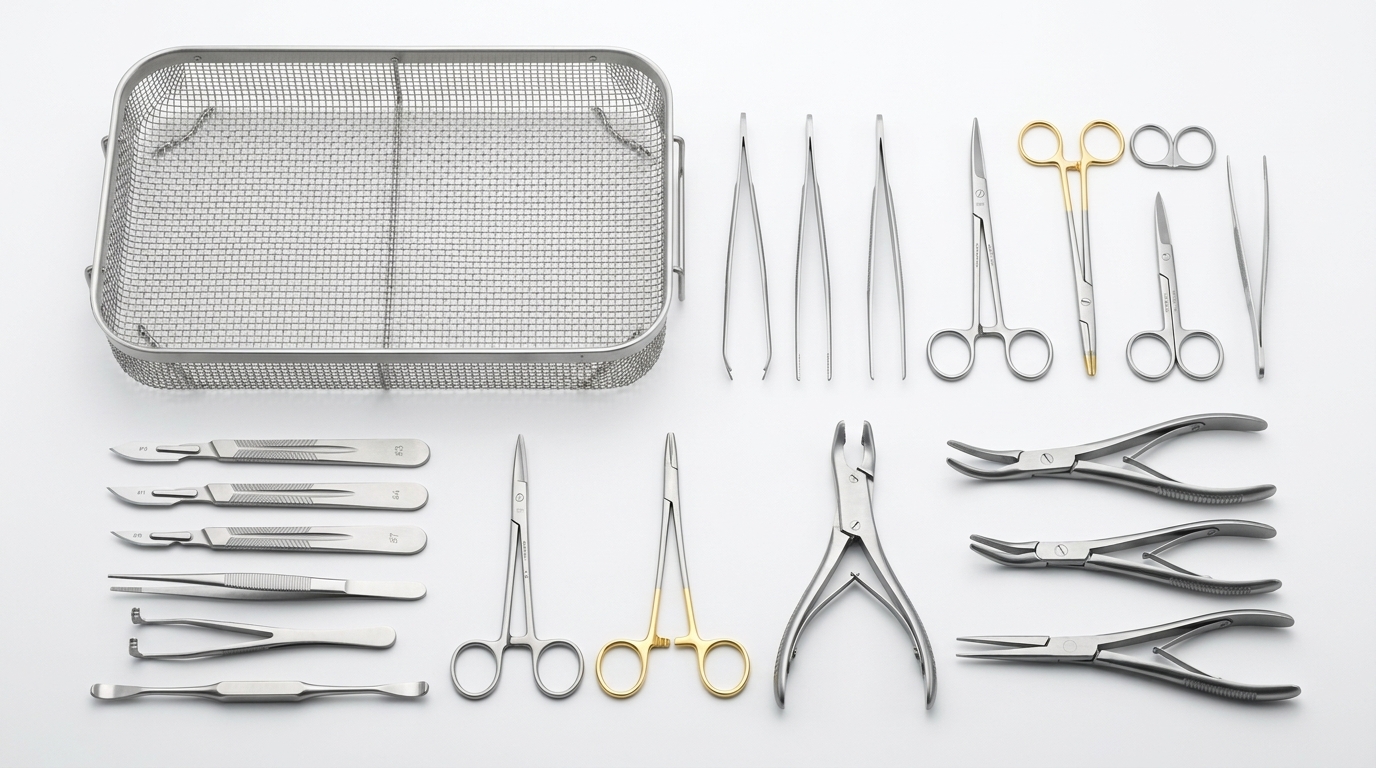
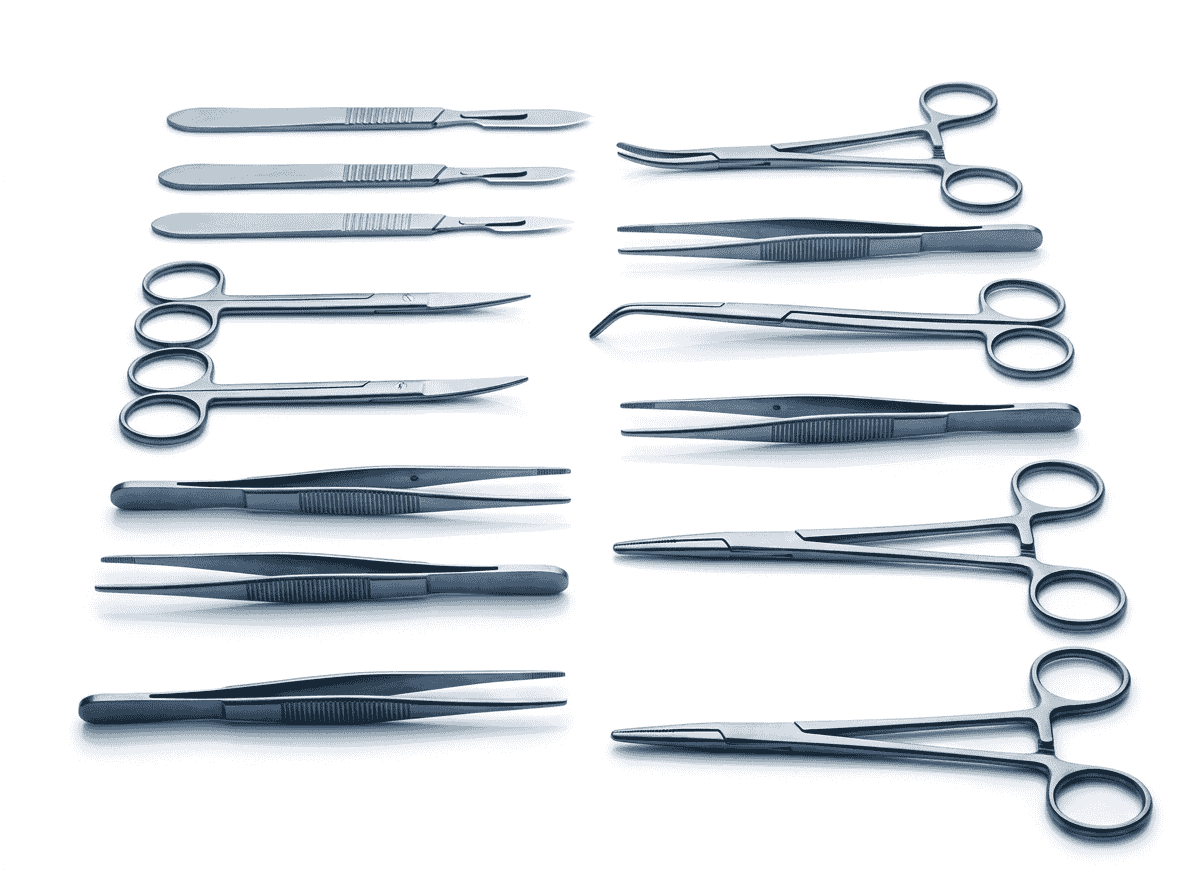
Surgical instruments are an essential part of surgical preparation and clinical practice. Doctors and medical professionals rely on instruments designed for specific tasks, including making incisions, dissecting tissue, grasping structures, controlling bleeding, providing surgical exposure, and completing wound closure.
Because surgical instruments are available in many patterns, sizes, and designs, understanding their intended functions is important for effective surgical preparation. Knowing the difference between commonly used instruments can also improve communication between surgeons, nurses, surgical assistants, procurement teams, and other healthcare professionals.
This professional guide provides an overview of surgical instruments, their common names, major categories, functions, material considerations, and important factors to consider when selecting instruments.
Understanding Surgical Instruments and Their Functions
Surgical instruments are specialized tools designed to perform particular tasks during surgical procedures. Their shape, size, handle, tip, jaw, and working end are generally related to the function they are intended to perform. A practical way to understand different instruments is to group them according to their primary function:
- Cutting and dissecting
- Grasping and holding
- Clamping and controlling bleeding
- Retracting and providing exposure
- Suturing and needle handling
- Suction and fluid management
Common Surgical Instruments Names and Categories
There are many instrument patterns used across different surgical specialties. Knowing surgical instruments names together with their functions helps doctors, surgical teams, and professional buyers identify the right instrument for a particular requirement.
Scalpels and Surgical Blades
Scalpels and surgical blades are primarily used for making controlled incisions and cutting tissue. Different blade shapes and sizes are available for different applications. The appropriate blade depends on the procedure and the level of precision and control required.
Surgical Scissors
Surgical scissors are used for cutting tissue, sutures, dressings, and other materials depending on their design. Common examples include:
- Mayo scissors
- Metzenbaum scissors
- Iris scissors
- Stitch scissors
- Bandage scissors
Surgical Forceps
Forceps are commonly used for grasping, holding, manipulating, or stabilizing tissue and other materials. Examples include Adson forceps, Tissue forceps, Dressing forceps, Allis forceps, and Babcock forceps.
Hemostatic and Clamping Instruments
Hemostatic instruments and clamps are designed to assist with controlling bleeding and temporarily clamping structures during surgical procedures. Common examples include Mosquito hemostats, Kelly clamps, Crile hemostats, Kocher forceps, and Right-angle clamps.
Retractors
Retractors are used to provide or maintain access and visibility within the surgical field. They may be handheld or self-retaining. Common examples include Senn retractors, Deaver retractors, Richardson retractors, Army-Navy retractors, and Weitlaner retractors.
Needle Holders and Suturing Instruments
Needle holders are designed to securely hold surgical needles during suturing. Common examples include Mayo-Hegar needle holders, Olsen-Hegar needle holders, and Mathieu needle holders.
How Instrument Design Can Affect Surgical Performance
Instrument design is about more than appearance. Features such as length, balance, handle design, tip configuration, jaw pattern, and locking mechanism can influence how an instrument is handled, including precision, control, visibility, comfort, and consistency.
Material and Surface Quality
Material selection is an important consideration when sourcing reusable surgical instruments. Stainless steel is widely used for surgical instruments because suitable stainless-steel materials can provide useful combinations of strength, corrosion resistance, hardness, and durability.
What Doctors Should Consider When Buying Surgical Instruments
- Product specifications
- Instrument design and precision
- Material quality and grade
- Manufacturing consistency
- Surface finish
- Available sizes and patterns
- Custom manufacturing capability
- Supplier communication and lead times
Why Choose StahlForge?
StahlForge provides surgical instruments for professional healthcare markets, with a focus on practical designs, consistent manufacturing, and dependable B2B supply. Whether a buyer requires individual instruments, larger quantities, or specific product requirements, StahlForge works with professional customers seeking a reliable manufacturing partner and surgical instruments supplier.
Frequently Asked Questions
Common questions from surgical coordinators, veterinarians, and procurement directors.
What are surgical instruments?
Surgical instruments are specialized tools designed to assist doctors and surgical teams with tasks such as cutting, dissecting, grasping, clamping, retracting, suturing, and suction during surgical procedures.
What are the main types of surgical instruments?
Common categories include cutting instruments, dissecting instruments, forceps, clamps, retractors, needle holders, and suction instruments.
Why is it important to know surgical instruments names and functions?
Knowing instrument names and functions helps medical professionals identify appropriate instruments for specific tasks and communicate more clearly during surgical preparation.
Why are surgical instruments available in different sizes?
Different sizes and designs allow instruments to be selected according to different procedures, anatomical areas, materials, and surgical requirements.
What should doctors consider when choosing surgical instruments?
Doctors should consider the procedure, intended function, design, size, material, handling characteristics, and the requirements of their healthcare facility.
Are all surgical instruments made from stainless steel?
Stainless steel is widely used for reusable surgical instruments, but the specific material and construction can vary according to the instrument and its intended application.
Why is instrument identification important in the operating room?
Knowing instrument names and functions helps medical professionals prepare procedure-specific instruments, communicate clearly, and maintain an organized surgical workflow.